Ladies and gentlemen on the Capcom BBS, today we take a hard look at Street Fighter IV. There are people online opining about the game, praising its merits and decrying its foibles. People like myself have spoken to no end about it. However not many gamers from the west have actually played it. We are opining on second-hand accounts and guesses. Drawing conclusions from grainy video on YouTube and screenshots of half-finished levels. The blogosphere can be a glorious cauldron of unfounded news bits. Dividing the virtual public between a love and a hate of a game yet to gogold. Friends, today I will play the devil's advocate and explain why you, the gamer, have set the bar so high that no matter how Street Fighter IV turns out it will not be enough to make you happy.
Join me for a trip, if you will, through time. We are going to examine the biggest misconception people have about the game. That there is a Street Fighter "team" at Capcom that cranks out the fighters. I am here to argue that it is not that simple. The actual team concept extends beyond the producer, beyond the artists, animators and programmers that put their reputation on the line. The team extends to people and influences no longer working at Capcom. These are the origin stories and influences we have to understand in order to explain why Street Fighter IV will fail in the eyes of some gamers.
Games define our culture. Our culture is a mirror reflection of the games we play. The immersion of the game experience is complete when the player has no recollection of when they began playing but only know that they enjoy playing. Certain titles and genres are our favorites but sometimes we don't know why. Street Fighter is a name that carries a legacy. It holds the title of greatest fighting game series ever invented. Part of the reason for that goes beyond the game, to a point where it forever influenced the global culture, not solely the game culture.
Culture is around us, it surrounds us, defines us and influences us from the day we're born. Musicians, artists, writers and directors interpret the world with their own unique voice. The challenge for them is to find a voice unique enough to hold our attention and make us understand how their voice is also ours. It is said that there are only about seven basic plot points but slightly more musical forms. Even game characters are hard to design without treading on older design. Culture has gotten to the point where we find it hard (but not impossible) to come up with "original ideas." Those that we perceive as truly inspired usually create great works as the result of their own external influences. After all George Lucas would not have given us Star Wars if he himself not been a great fan of Akira Kurosawa's films. 

In a similar way we would not have had the original Street Fighter without the legend of Mas Oyama, Yoshiji Soeno and other martial artists. The foundation for the game was based in part on real fighters. Despite the fantastic attacks featured in the game, many of the fighters themselves where caricatures of real styles. The rest of the game was "filled in" with design cues and influences from pop culture, other titles, manga and comic books. Years later we would not have Street Fighter II without the influence of Double Dragon,Master of the Flying Guillotine, Hokuto No Ken, Tiger Mask or many more things. These influences were themselves influenced by other things. We could chalk the characters and designs to coincidence or, like FightingStreet.com does, point out a large number of similarities between game characters, real people and animated ones. What is most important to the legacy of Street Fighter is what each of the contributors brought to the table. The producers and contributors to each game added their own vision. A vision influenced by many, many things.
The two men most responsible for the 1987 release of the original Street Fighter were Takashi Nishiyama and Hiroshi Matsumoto. They set a basic game involving two fighters proving their worth on a global tour. Secret moves, bonus rounds and a colorful cast would help solidify the template for the series. These two wouldn't stay with Capcom forever, the paths they chose were unique. You might not even be aware of some of the titles these men would work on. Mr. Nishiyama worked on many, many titles but always seemed to stay close with fighters. He left Capcom and ended up working with the "competition" at SNK. He had a hand in several Fatal Fury games but his biggest success came with King of the Fighters. Takashi was able to create a worthy rival for Street Fighter by combining the cast from Art of Fighting, Fatal Fury and even Ikari Warriors. Mr. Matsumoto was more of a journeyman. He worked on a wide variety of titles including Silhouette Mirage and Sonic Advance. If there ever was a reason why Dragon Ball Z: Budokai was a good fighting game then chances are it was his involvement. Eventually Hiroshi returned to Capcom and ended up working on Dino Crisis 3 and Dead Rising.
In 1988 Yoshiki Okamoto was asked by Capcom to create a sequel. His release title Street Fighter 89 played nothing like the original as it revolved around three characters in a side-scrolling brawl. This game was Mr. Okamoto's version of Double Dragon II: The Revenge and would eventually be renamed Final Fight. He went back to the drawing board to give vendors what they really wanted. Senior programmers Akira Nishitani and Noritaka Funamizu have a hand in ensuring that the game has a broad cast of characters and is more or less balanced. Along with the help of Capcom artists Akiman, Bengus and Sensei, the game looks and plays like nothing before. Street Fighter II is released in 1991 and becomes a global phenomenon.
The reason that SF II became such a hit was not solely due to timing or design. Having Akira, Yoshiki and Noritaka working on the project, collaborating and revising was possibly the most important thing going into the development. It is something that most gamers fail to recognize, the team that put the game together. Each of these men brought with them their own experience, their influence and their own vision. Their favorite characters, art styles, cartoons, movies and games pushed them in a certain direction. They didn't come up with Street Fighter II by pure chance. When combined with one of the greatest art teams in videogame history the end result was something for the history books. After Street Fighter II each person individually was responsible for pushing the genre forward.
Akira Nishitani left Capcom to start up developer ARIKA, one of his first titles was Street Fighter EX. He was the first person to push Street Fighter into 3D. He went on to work on other titles like Final Fight for the GBA and Endless Ocean but his largest mark in videogames was SF II and SF EX. Yoshiki Okamoto remained at Capcom until 2004. In that time he worked on many games. His fighting games alone account for a good portion of the genre including Street Fighter Alpha 3, Rival Schools: United by Fate, Pocket Fighter, Darkstalkers 3, Street Fighter III: Double Impact, SNK vs Capcom: Match of the Millennium, SNK vs Capcom: Card Fighters Clash, JoJo's Bizarre Adventure, Street Fighter III: 3rd Strike and Street Fighter EX 2 Plus. Of the original three big men Noritaka Funamizu created the most unique legacy.
Although he had the biggest hand in SF II, Mr. Funamizu found it difficult to work on SF III without his colleagues. Takashi Nishiyama and Hiroshi Matsumoto had moved on years before. Takashi's King of Fighters with their unique tag-team system and cast of fan favorites and new faces had become a true rival to Street Fighter. Akira Nishitani was unavailable to help with the development of SF III as he had also left Capcom. Noritaka seemed short on time and experience as only he and Yoshiki reamined at Capcom. Creating a true SF III required the input and vision of many, if he could not deliver a perfect game then it would be a strike to the series. It seemed as if Noritaka was between a rock and a hard place. That is when he realized that rather than go forward into uncertain territory, rather than push for a SF III without his colleagues he could instead take the series back in time and explore unique possibilities. He decided to set a game between the original and second SF titles. This game would also include visuals inspired by the highly-popular SF II Animated Movie. In addition to SF and SF II characters Noritaka even include characters from Final Fight as well as some new faces. He then presented the characters in a highly-stylized fashion by making the sprites appear just like the art of Capcom great Bengus. The mix of classic characters, large, beautifully animated sprites and well-balanced gameplay helped make Street Fighter Zero: Warriors Dreams a success. Noritaka made the impossible, possible, a successful follow-up to Street Fighter II without it being called III. He succeeded in the genre by making a love letter to the fans of the series. It was also an homage to his colleagues at Capcom and even those that no longer worked there. Mr. Funamizu's legacy had many stages yet to go. He would go on to make a sequel to Street Fighter Zero even better than the original. Then he moved on to various other types of fighters like X-Men vs Street Fighter, Rival Schools: United by Fate, Pocket Fighter, Darkstalkers 3, Star Gladiator, JoJo's Bizarre Adventure and Street Fighter III: Double Impact.
For a moment we shall overlook the Tomoshi Sadamoto produced Street Fighter III. It did not gel with audiences even though the mechanics, animation and control were light-years ahead of the competition. The best we can do isspeculate that cultural differences in the character designs and a failing US arcade industry were part of the reason why it was not as popular as SF II or SF Zero. What is important is to note that during this period the biggest movers in the genre were from outside of Capcom. Arc System Works, SNK, Namco, Konami, SegaSammy and Taito have all released fighters achieving a popular following and longevity in the arcade and consoles. In that time Capcom scaled back and eventually closed down their 2D wing and ignored fighting game titles. Gamers were critical of Capcom using the same sprites across several titles, showing a lack of innovation in the genre they defined. The cancelled game Capcom Fighting All-Stars and poorly received Capcom Fighting Jam / Fighting Evolution looked like the final nails in the coffin. By 2004 Mr. Okamoto and Mr. Funamizu had left Capcom. The last senior SF designers had left the building and Capcom believed the series was finished.
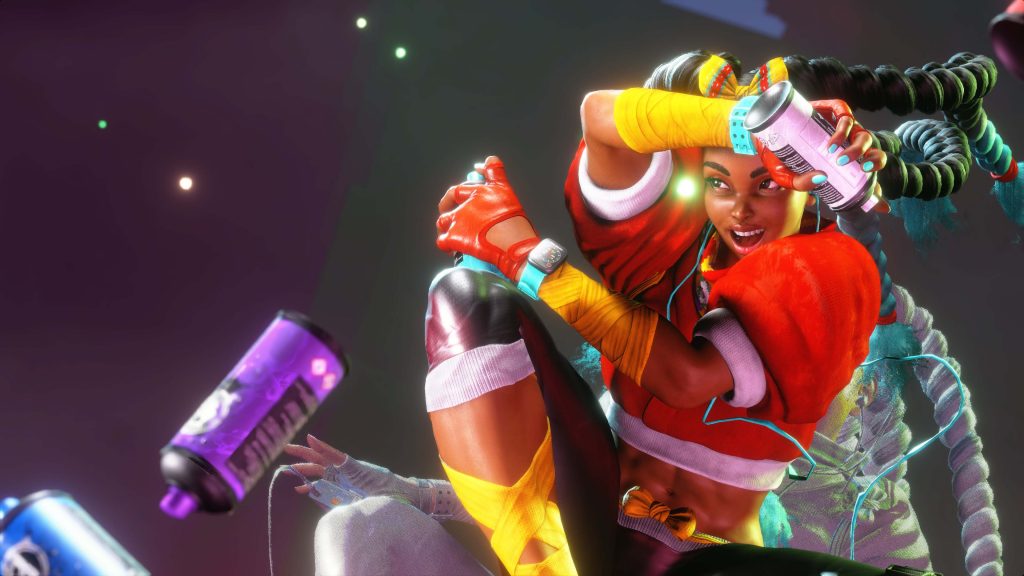
In an interview with EGM, Yoshinori Ono the producer of SF IV explained that he had to work hard to get Capcom interested in resurrecting the franchise. This was surprising as gamers all over the world very much still enjoyed the series. Mr. Ono also let the community know that the game would be rendered in 3D but take place strictly in a 2D battlefield. Since the announcement fans have devoured every bit of news there was. Many were surprised that it would take place before III and even that the original SF II cast would return. Since January 2008 Capcom has announced one new character to the lineup every month. The new characters caused some concern within the community because some looked out of place, not at all as timeless as previous SF designs. Fans began demanding that Capcom get it right. Unfortunately they, themselves fail to recognize how different the SF "team" is now compared to the one that created SF II. If a Halo FPS shooter was developed by Microsoft but not by Bungie, fans would know and be able to point out the nuances that makes Halo play like Halo. The developer of SF IV is still Capcom and the mechanics seems to be identical to previous SF games but the internal team is completely different.
Fans fail to recognize that Mr. Ono has no senior members of the SF, SF II or SF III team to turn to for advice. The multiple points of view, the unique perspective that al of the producers had contributed is now gone. Those men have moved on, taking with them their influences, direction and vision. Even though the art team at Capcom is more or less the same, they have to create characters that fill his vision and contemporary fighting game design. The influence that Mr. Ono and the rest of his team draws from is completely different than it was 15 years ago. The movies, music, animation and games are completely different than those of the original teams. Some argue that the "golden age" of fighters has passed and that fighters today are only recycling ideas from each other. Purists would argue that there hasn't been a truly original fighting game since SF II. Seeing the similarities between the newest characters added to the lineup; C. Viper, Abel, El Fuerte and Rufus and characters featured in King of Fighters, Virtua Fighter and Tekken would validate that claim. Some of the modern ideas may not be bad but the martial arts influence of the SF series and fighting game in general seems to be weaker now. The biggest influence these days seems to come from anime and street culture rather than modern warriors.
A critic can point to Mr. Ono's resume as proof that he is going to ruin the franchise. Mr. Ono has worked on Marvel vs Capcom: Clash of the Super Heroes, Street Fighter III: Third Strike and Capcom Fighting Evolution. None of those games were as popular or successful as earlier SF titles. Marvel vs Capcom was very fantastic, over-the-top and not what fans expect in a SF game. Worse it was loosely balanced and featured sprites pulled from different titles, making it appear rushed to market. SF III Third Strike is considered the weakest in the SF III updates because it introduced many nonsensical characters into the engine. Mr. Ono was put in charge of the CFE project because the original producer left. Even though he was tasked to finish someone else's game his name was still attached to it. So when it debuted to harsh reviews he was the scapegoat. The man that has been associated with the weakest fighting games released by Capcom seems to be flubbing the development of SF IV. Or is it possible that players are putting too much stock into what he should be doing rather than is doing?
The truth is that Mr. Ono is one of the very few people in the industry actually pushing to keep the genre going. In Japan the arcade industry is still alive and fighting games are worth investing in. The west no longer has a strong arcade presence and seems to have moved on to sandbox and FPS titles exclusively. Even Capcom, who once cornered the market on fighting titles, no longer believed that it was worth their time or money to resurrect the franchise. Without the constant pushing from Mr. Ono then chances that a new Street Fighter game, in any form, would never have happened. We should be thankful that at least one person at Capcom still believed in the series and had the same hopes of long-time fans. Street Fighter IV may not be perfect when it is released but if history has taught us anything it is that no Street Fighter game is ever perfect out of the gate. It usually takes a revision or two before it actually hits its stride. We can be assured that there will be a SF IV Turbo or Hyper in the works right after the first sells a million units. From now until that time people should be mindful that Mr. Ono is just one man, well-meaning but not omnipotent. He does not have the luxury of working with three or four other people who have each produced a SF title. He can't pick their brains, bounce ideas off of them or see his title with a fresh pair of eyes. He is going to create a SF game that meets his expectations and influences. Like Noritaka before him, he dares not to go forward in time but instead tries to connect the events between two previous SF games. Giving fans the characters they know and like with an additional plot. That type of thinking worked once for Capcom and he is hoping it will work again. The least a gamer could do is cut him some slack. The most they could do is try to understand the dilemma he is in. He is damned if he does and damned if he doesn't give the people a new Street Fighter.
Welcome back friends. I bet you thought I was going soft, playing the devil's advocate and all. I should be doing that, should be more even-handed with my coverage of the news. But it turns out that only my friends read these rants so the best I can do is preach to the choir. The real movers and shakers in the online community are actually people that post on forums. That is something that I don't do very often because things can get out of hand quickly over there. Besides, the last time I checked I wasn't as much a ballyhooed journalist as I was an opinionated rant-type-guy. To ask me to tone down the one-sidedness and post more articles like the Devil's Advocate would be like asking my friend Adriel to stop slathering on the lard. It's impossible! Today I'm going to pick on the SF team again. Point out those odds and ends that they and gamers in general seem to miss.
It all started when SF IV project manager Natsumi Shiozawa mentioned on the Capcom blog that the team was busy at work bringing the characters to life. In order to really understand them they had to do their homework and go back through old material. Of course this also meant that Miss Shiozawa herself also had to learn as much about the games and characters as she could. She mentioned that some of the collection they turned to was rare and out-of-print. It is sad that Shinseisha, the publisher of many of the books went under, but sadder yet that the team had to turn to them for reference. Had their memory slipped that much or was it because they haven't produced a brand-new Street Fighter in such a long time? It makes me worry a little more about the team working on this title, it makes me worry about Yoshinori Ono.
If you are working on a franchise title then you absolutely have to know as much about it as you can. You can't fake it and you can't cram that knowledge in over a weekend. You have to be aware of the subtleties of the characters, their control, timing and balance. Like Jai says you have to know the cultural relevance of the characters and the importance of great design. You have to keep an eye on new character development and be able to pick out what works for your game and what works for another. You have to know how the levels and music fit but most important you have to know what needs to be changed, combined or cut altogether. I'm not sure how Mr. Ono is approaching the task.
A few years ago I heard Eiji Aonuma speak at the GDC. He talked about his work for Nintendo and contributing on several Zelda games. He said that in order to achieve a Zelda-esque experience the team would have to suffer through the Shegeru Miyamoto test. Better known to the people inside Nintendo as "upending the tea table." The phrase itself came from an old Japanese idiom, that when the father of a household had reached his limit, his breaking point, he would show his dissatisfaction by flipping the table at home. He wouldn't give warning, he wouldn't say a word, he'd just flip that table over. From a cultural point of view it's unique to see how Japanese programmers approach the development cycle. We certainly wouldn't have a phrase that captures the same context as upending the tea table.
Mr. Aonuma said that Shigeru never actually flipped tables on his team but would do something comparable. Right as the team was nearing completion of the title Mr. Miyamoto would come in and completely change the direction of it. Just like the father figure, he wouldn't give warning, he'd just upend that table. It was then that the team had to learn their chops and figure out how to fix the game, where to make their cuts and what to add in order to make it a new game while still keeping the same classic themes. Mr. Aonuma knows that Miyamoto's approach to game design made him and everyone on the team all the better for it. The challenge of taking a character and game you know and love and making a new experience out of it is harder than it sounds. Mr. Aonuma said that he learned how to pile on the "trivial" production techniques to achieve the desired effect. At the same time he had to learn when to pile and when to take away. To establish a new theme in each game. This is something that he wanted all of the attendees to learn and be able to challenge themselves and their own teams with.
I appreciate that the new SF team is passionate about the game. Miss Shiozawa even painted her nails with SF characters for the AOU debut. It's great that they are referencing their legacy rather than making it up as they go along. At the same time I am a bit skeptical as to how they are approaching it. If they base their new game on notes from old game mooks then where is the evolution, where is the originality? During location tests they were surprised to see a number of foreign players showing up. In the surveys from those tests there were a large number of players in their late 20's and mid 30's. If they thought about the math they should have expected that type of turnout rather than be surprised by it. SF II came out 17 years ago, the original title 21 years ago. Those players, from all over the world, with fond memories of it are going to be over 30. You would think the SF team would have gone into production catering to a mature international crowd.
Mr. Aonuma started his career at Nintendo as a designer, a pixel designer. According to him he was not good at playing Zelda, he was better at text-based adventures. "The titles that didn't require skill." Thanks to his experience with Shegeru Miyamoto he learned many production techniques and ways to approach every title. I thought of Mr. Ono while remembering the lessons of Eiji and wondered how he was approaching Street Fighter IV. Was Mr. Ono flipping tables, was he collaborating or was he playing it safe and making a sequel "by the numbers." By bringing back the SF II cast and inserting popular character designs his title seemed to be very formulaic. Mr. Ono could be approaching this SF title in the way that every other studio would have, see where you've been and copy it.
Case in point. I said that Street Fighter needs a bad girl to balance Chun-Li. My friends here, the purists said Hokuto or Ibuki would work well in SF. But I decidedly said that the new girl has to be bad and the two choices I nominated were Poison or Dansu. These characters were way different than the Vice / Mature clone in SF IV. A designer with a more keen eye, somebody that doesn't just go for the obvious choice knows how to approach the cast. The "flipping the table" equation here is to put Dansu in the game (with some wardrobe changes) and let her represent Shadowlaw. A producer would let the fans rage about the choice online and in print. The thing they wouldn't see coming would be revealed after the game comes out. That is when it is revealed that Dansu is Poison. Poison was acting as a spy. The Madgear / Shadowlaw rivalry that was in SF Zero would return with this subtle turn. But I'm oversimplifying things. Just because I peg a character's look doesn't mean that her moves, balance and control have been figured out. That Dansu could bring back themes of Poison, with fancy backflips and knife slashes, while not being too obvious that it's her. Those are the things that separate a producer from a daydreamer. 
I defy you, the gamer, to invent a new SF character that fits all the conventions in the series. Think back to yesterday's rant. Think about all the influences that went into Street Fighter II. Surely there has to be a character floating out in the ether that would be a perfect fit for the cast. More important, would be a much-needed bad guy in the lineup. I sat and thought about it for a while. Then inspiration struck while thinking about the Capcom legacy, including that fat guy Rufus and how Sammo Hung was the template for fast, fat fighters. It wasn't the things that influenced SF, per say, but instead a shot that I had seen in Onimusha 3 that tied these things together. There is a part in the Onimusha trailer where the main characters engage in a sword fight. Samanosuke avoids three strikes by the boss by turning deftly. The swordplay in the footage at 2:57 reminded my very much of the fights in old kung fu films. As it turned out Donnie Yen choreographed the game cinema. Donnie as you may know is trained in kung fu and is also a big star in Hong Kong cinema. The Onimusha clip reminded me of an equally epic battle from an older Hong Kong film. The Jackie Chan, Sammo Hung movie "Project-A." It features an awesome battle against the villainous **** Wei. You can see it at about 4:19 into this clip. Very familiar to Onimusha wouldn't you say?

Imagine if you will if a character that looks just like San-Po were announced for SF IV. How would you have reacted to him? Even if you had never seen Project-A or known that the main actors were barely pulling any punches on the final battle, would he have left an impression with you? Would you have liked him more or less than the characters that have already been revealed? Would he make you think of characters that you've seen in the King of Fighters, Virtua Fighter or Tekken? Is his look a bit like Mortal Kombat or reserved enough that it isn't that hokey. Is it possible that you would have thought San-Po was too random to fit into SF?
How can you create a character that really fits into the universe when all the great designs have been taken?
The people that gave us SF II were way ahead of this blog. They saw the design of San-Po and a dozen other fighting films and broke it down to a basic level. The design team improved upon the look of the pirate by adding a mask and claws. They took the Chinese influence and mixed it with a Spanish matador. Bengus sealed the deal and gave the beautiful assassin claw-like fingernails, ornate gauntlets and a colorful paint job. These were the things that elevated him above a regular character, or someone pulled from a movie and instead made him memorable in the game universe. As great as San-Po would have looked in the lineup he wasn't perfect. But without San-Po chances are that the character Balrog (Vega in the US) would have just been a fighting paladin. I wonder if the new SF team is able to extrapolate characters in this way rather than just see what's trendy in arcade fighters and put them in SF IV.
I wonder if Mr. Ono and his team have thought that much about the series. Rather than just look through a bunch of old strategy guides have they spent time looking at the world that influenced SF II? Instead of pursuing a sequel on the superficial level are they approaching the game with a deeper understanding? When it comes to games that I really enjoy these are things that run through my mind. For me it's a daily habit. I may not write about it but you can bet your bottom dollar that I'm thinking and obsessing about it. I know it's not normal behavior. It certainly can't be healthy but it's just the way I am. Now if you'll excuse me I have a table to upend. Let me know what you think in the comments section please.